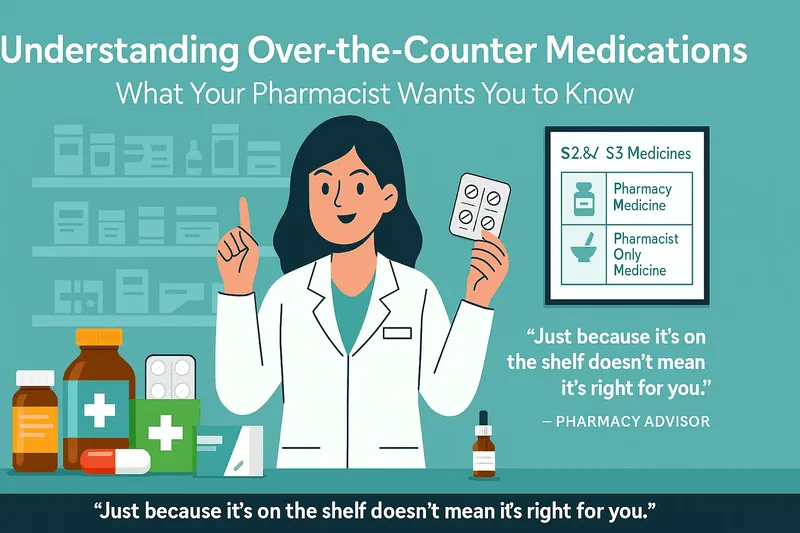
Not all medications need a prescription—but that doesn’t mean they’re risk-free. Over-the-counter (OTC) medications, including S2 and S3 medicines in Australia, should still be used with guidance.
What Are S2 and S3 Medicines?
- S2 (Pharmacy Medicine): Can be sold in a pharmacy without advice but still carry risks—like antihistamines, low-dose ibuprofen, or medicated creams.
- S3 (Pharmacist-Only Medicine): Requires pharmacist advice before being sold. This includes stronger allergy medicines, codeine-free pain relief, or eye drops.
Common Misconceptions
- “OTC means it’s safe for everyone.” Not true—some OTC meds interact with prescriptions or worsen conditions.
- “You can combine products for stronger relief.” Combining cold/flu meds can lead to dangerous paracetamol doses.
- “Natural is always safer.” Herbal supplements can affect liver function, heart rhythm, and blood pressure.
How Your Pharmacist Helps
Pharmacists are trained to evaluate symptoms, ask about your medical history, and recommend the safest option. They’ll also spot when self-care isn’t enough—and refer you to a doctor when necessary.
“Just because it’s on the shelf doesn’t mean it’s right for you.”
— PHARMACY ADVISOR
Before you grab something over-the-counter, have a quick chat with your pharmacist—it might just prevent a serious mistake.